
The US and Israel launched strikes on Iran after what the Israeli military said was months of “close and joint planning.” Israel said its strikes targeted Iran’s supreme leader, president and head of the armed forces. The US is planning for several days of attacks. President Donald Trump described the US military campaign as “massive and ongoing,” warned American lives may be lost, and called on Iranians to “take over your government.” Iran launched an unprecedented wave of strikes toward Israel and US targets across the Middle East. Explosions were reported in the UAE, Bahrain and Qatar and in Dubai, where all flights to and from airports have been suspended. The attacks sparked global responses. The leaders of some US allies expressed concern, while some Arab nations condemned Iran’s retaliation.
Jimmy Carter, Right-Wing Democrat
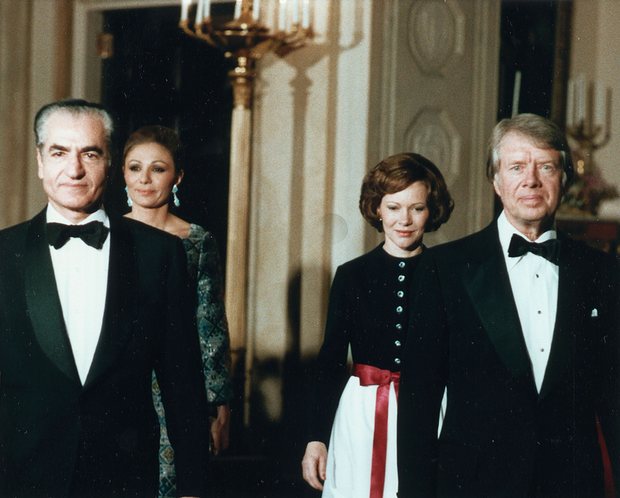 You can’t understand the presidency of Jimmy Earl Carter, Jr. unless you contextualize it within the framework of the hysterical aftermath of the 1972 election. While the Republican Party brand suffered tremendous damage due to Watergate, President Richard Nixon’s decision to prolong the Vietnam War and his resignation, the GOP proved improbably resilient. Despite a deep recession and an energy crisis, to say nothing of fallout from the Nixon pardon, Gerald Ford came within two points of defeating Carter a mere two years after Nixon resigned in disgrace; the decisive counterrevolutionary fervor of the Reagan Revolution followed four years after that.
With the spotlight on these earth-shattering events, it was easy to miss the civil war within the Democratic Party, between its liberal and centrist wings, that was prompted by the landslide defeat of Senator George McGovern in 1972. (“Centrist” is used here for simplicity—that’s what they call themselves. By objective global standards, the centrist faction of the Democratic Party is corporatist and militarist, and therefore was and remains right-wing.)
In an exercise that would feel familiar to anyone observing the current struggle between progressive and corporate Democrats in the wake of the Kamala Harris debacle, party leaders and activists spent 1973 through 1976 blaming one another in ferocious fights over what went wrong and which wing of the party ought to be trusted to control the organization going forward.
Ultimately, centrists won the power struggle and sidelined the liberals. Though he entered the race as an outsider, Governor Jimmy Carter of Georgia cemented the centrists’ victory and locked in the ideological template honed by another centrist Southern governor, Bill Clinton, and that still dominates today’s Democratic Party leadership. Old-fashioned liberals tried to stage a comeback under Walter Mondale in 1984 and Michael Dukakis in 1988; instead, their losses strengthened the centrists’ argument that Democrats needed to chase the Republicans as they migrated further right.
It is easy to see why many Americans put Carter in the liberal box. More than any other modern president, he talked about human rights in the context of U.S. foreign policy. He was the only president who didn’t wage any wars. His manner was affable and soft-spoken.
Whether or not they are ever successfully enacted, however, a president is defined by policies. Any objective analysis of his record must lead to a clear conclusion: Carter was a right-wing Democrat. And it mattered a lot. While his one term is typically dismissed by historians as lackluster or ineffectual, it had a dramatic impact on our politics.
Carter was our first post-liberal Democratic president. Half a century later, as Joe Biden packs his bags, the Carter model still holds. (Recognizing an ideological fellow, Biden was the first Democratic senator to endorse Carter in 1976.) There is no sign that a traditional mid-20th-century-style liberal like Hubert Humphrey, LBJ or Adlai Stevenson, who championed the poor and working class and were generally skeptical of foreign military adventurism, will have a serious shot at capturing a Democratic presidential nomination any time soon.
Inheriting a wobbly economy from Gerald Ford, Carter decided to prioritize the fight against inflation over what a liberal would have cared about more: keeping as many Americans employed as possible. He appointed Nixon’s former undersecretary of the Treasury Paul Volcker as chairman of the Federal Reserve Bank. Volker hiked interest rates to 20%, triggering huge back-to-back recessions that lingered into the 1980s. A liberal president would have turned to Congress to try to mitigate the misery. But Carter became the first Democratic president not to propose a federal anti-poverty program.
Carter’s conservatism expressed itself most fully through his cynical Cold War foreign policy. Although most Democratic voters would have been enraged had they known at the time, discredited figures on the Republican right like David Rockefeller and Henry Kissinger were on speed dial in the oval office and frequently had the president’s ear whenever there was a crisis overseas. The most pernicious influence inside the administration was national security advisor Zbigniew Brzezinski, who fell to the right of Republicans when it came to the Soviet Union.
Carter’s team of foreign policy hawks convinced him to set aside his better judgment and reluctantly admit the dictatorial Shah of Iran to the United States to receive medical treatment, an unforced disaster that triggered the Iran hostage crisis and contributed to his defeat in 1980.
Never one to stay quiet despite repeatedly being proven wrong, Brzezinski notoriously pushed for Carter to fund and arm the radical Muslim Afghan mujahedin, many of whom eventually morphed into Al Qaeda and the Taliban. There is a strong chance that 9/11 would never have happened if not for Carter’s backing of jihadi fanatics. Does anyone doubt that the world would be better off today with an Afghanistan where women wore miniskirts, as they did under the Soviet-backed socialist secular government in the 1970s, than burqas?
Brzezinski argued that Afghanistan would become the USSR’s Vietnam, a quagmire that would destroy the country morally and economically. No one knows whether the Soviet defeat in Afghanistan had the desired effect. The world clearly became more dangerous after 1991, when the United States began to enjoy the lone superpower status that it exploited to run roughshod over Afghanistan, Iraq, Libya, Syria and countless other victims of American imperialism. Without its socialist Cold War adversary offering an alternative if flawed economic model, America’s capitalists declared themselves victors at the End of History, with no need to share profits with workers or exhibit deference to other nations.
Carter needlessly politicized the Olympics by boycotting the 1980 Summer games in Moscow. The following year, one of my classmates in college was to have been on Team USA in fencing; I never forgave Carter for dashing her and her teammates’ hopes.
Carter is lionized as a pacifist. It wasn’t so when he was president. Most people think that we have Reagan to thank for the out-of-control military spending that began with his massive U.S. defense buildup in the 1980s. But the current cult of militarism really started under Carter, a fact that Reagan himself later acknowledged.
Worst of all, Carter was a liar and a hypocrite. Even while he claimed to prioritize human rights, his White House propped up vicious dictatorships. “Inaugurated 13 months after Indonesia’s December 1975 invasion of East Timor, Carter stepped up U.S. military aid to the Jakarta regime as it continued to murder Timorese civilians. By the time Carter left office, about 200,000 people had been slaughtered,” Fairness and Accuracy in Reporting’s (FAIR) Jeff Cohen recalled. “Elsewhere, despotic allies—from Ferdinand Marcos of the Philippines to the Shah of Iran—received support from President Carter. In El Salvador, the Carter administration provided key military aid to a brutal regime. In Nicaragua, contrary to myth, Carter backed dictator Anastasio Somoza almost until the end of his reign. In Guatemala—again contrary to enduring myth—major U.S. military shipments to bloody tyrants never ended.”
Carter pardoned the Vietnam-era draft dodgers only to turn around and restore draft registration the very next year. If you are a male assigned at birth, you face five years in prison, a $250,000 fine and losing your college financial aid unless you register for the next military draft in America’s next unpopular war with the Selective Service System. That was Carter. And it wasn’t liberal.
Nor was he.
(Ted Rall (Twitter: @tedrall), the political cartoonist, columnist and graphic novelist, co-hosts the left-vs-right DMZ America podcast with fellow cartoonist Scott Stantis and The TMI Show with political analyst Manila Chan. His latest book, brand-new right now, is the graphic novel 2024: Revisited.)
TMI Show Ep 35: “Assad Falls; What Now for Russia in the Middle East?”
Ties between Syria and Russia go back not only through the Soviet Union but even to Czarist Russia. Now, presumably because Russia is so focused on Ukraine, it was unable to save its ally, President Bashar al-Assad, from being deposed by Islamist insurgents. Assad is safely in Moscow but Damascus is a different matter.
Americas who remember the optimistic coverage of the fall of Baghdad in 2003 know better than to take similar images and coverage seriously now. International security analyst and Russia expert Mark Sleboda joins Ted Rall and guest co-host Robby West (filling in for Manila Chan) on “The TMI Show” to talk about the broad international implications of the collapse of the Syrian state, rising instability, and where Russia and Iran go now when it comes to influence in the Middle East.
TMI Show Ep 31: Can Putin Save Syria? An Exclusive from Inside Aleppo
Scarcely noticed by most of the world, the Civil War in Syria has been grinding on for more than a decade. A proxy war, with the central government of Bashar al-Assad, supported by its traditional ally Russia (along with Iran and Hezbollah in Lebanon) against an assortment of radical jihadi militias, including remnants of Al Qaeda supported by the United States under cover of going after the terrorist group ISIS, the balance of power had remained relatively stable at the front lines despite the threat of total fragmentation as Syria’s Kurds seized their own autonomous zone—until a couple of weeks ago.
Now an Al Qaeda affiliate called Hayat Tahrir al-Sham and its allies have launched an offensive that shocked the world by capturing the second largest city in Syria, Aleppo.
The TMI Show brings you an EXCLUSIVE look from directly inside HTS-occupied Syria with Steven Sahiounie, a Syrian national and journalist in Aleppo.
What is it like to live under HTS control? How likely are they to topple the government of Bashar al-Assad in Damascus? What would be the regional and global implications of a radical jihadi state on the border with Israel? The United States has been trying to persuade al-Assad to abandon his allies Russia and Iran, but has so far failed. Is that likely to change? Can Russia, trying to close the deal in Ukraine, divert resources to save the Syrian government?
Ted Rall Interviewed by IRINN TV about Trump
This interview aired on November 6, 2024. I always sound better in Farsi.
The Final Countdown – 8/20/24 – Biden Speech Underwhelms as DNC is Briefly Disrupted by Gaza Protestors
 On this episode of The Final Countdown hosts Ted Rall and Steve Gill discuss the latest developments from around the globe, including the latest out of the DNC.
 The Final Countdown – 8/16/24 – Trump Requests Delayed Sentencing, Kamala Harris Unveils Economic Policy
On this episode of The Final Countdown hosts Ted Rall and Steve Gill discuss Trump requesting delayed sentencing.
The Final Countdown – 8/13/24 – Trump’s Interview with Musk Nets Tens of Millions of Views
On this episode of The Final Countdown hosts Ted Rall and Steve Gill discuss a plethora of current events, including Elon Musk’s interview with Trump. The Final Countdown – 8/9/24 – U.S., Qatar, Egypt Push for Ceasefire Summit
On this episode of The Final Countdown, hosts Ted Rall and Steve Gill discuss the latest news from around the globe, including rising tensions out of the Middle East. The Final Countdown – 8/6/24 – Kamala Harris Picks Minnesota Governor Tim Walz as Running Mate
 On this episode of The Final Countdown, hosts Ted Rall and Steve Gill discuss various current events around the world, including Kamala Harris announcing her VP pick.