SYNDICATED COLUMN: Why Are “Feminists” Telling Women Not To Protect Themselves from Rapists?

•

Identity politics, a writer friend reminds me, is where liberalism goes to die.

The oceans are boiling, freelance journalists’ heads are getting lopped off, and there’s not the slightest sign of resistance to income inequality so out of control it would worry Cornelius Vanderbilt. Yet the Internet’s politically-correct “social justice warriors” are dedicating their formidable energies into attacking pissant trivialities.

Anyone who doubts that online slacktivists have their heads so far up their collective asses that they can’t see daylight need only read up on the controversy over Undercover Colors, which is a nail polish that allows women (or men, but they’re not the target audience) to discreetly discover whether their drink has been spiked by one of several common “date rape” drugs.

(My advice to women: if you’re at a party or with a guy so sketchy that you think you may have been slipped a mickey, don’t bother with the fancy polish. Just scoot. You don’t want to be there anyway.)

Better safe than sorry, right?

Wrong.

“Anything that puts the onus on women to ‘discreetly’ keep from being raped misses the point,” writes Jessica Valenti, a once-influential feminist blogger whose hammer-to-the-skull-obvious post-motherhood columns for The Guardian add to the case for automatically censoring any piece of writing by a parent about their children. “We should be trying to stop rape, not just individually avoid it.”

Um, what?

Valenti is serious about this: “So long as it isn’t me isn’t an effective strategy to end rape. ‘Undercover Colors’ polish and products like it only offer the veneer of equality and safety. And that’s simply not good enough.”

Which is true. And stupid.

Like: wearing shoes isn’t an effective strategy to stop assholes from breaking glass bottles on streets. Since assholes do leave shards of glass all over the place, however, walking barefoot isn’t smart.

Installing a car alarm or using an anti-theft device like The Club is an example of “individual avoidance.” One wishes that it were possible to leave one’s automobile unattended free of fear that someone might steal it. But reality dictates that, if you park in a high-crime neighborhood, you take measures to deter thieves. True, it’s a “so long as it isn’t me” strategy. But what else can you do? We’re not likely to see an effective strategy to eliminate car theft any sooner than “an effective strategy to end rape,” a crime endemic in every culture throughout history.

How removed from the real world are writers like Tara Culp-Resser of Think Progress, who also criticized the entrepreneurs who invented the anti-date-rape polish? “It would likely be more effective to focus on larger efforts to tackle the cultural assumptions at the root of the campus sexual assault crisis,” she wrote. “Like the idea that it’s okay to take advantage of people when they’re drunk.”

To my horror, I have known men who bragged about having raped inebriated women. (Since their accounts were devoid of details, it would have been pointless to report them to the police.) They didn’t violate women because of “cultural assumptions.” They did it for the same reason that CEO pigs issue themselves huge raises the same day they fire thousands of employees: because they can.

This reminds me of the complaint against liberals who claim to support public education, yet send their kids to private school. If your local public schools are decrepit or dangerous, it’s unconscionable to subject your children to them if you can afford not to. Obviously, we should fight to ban private schools, and for that matter the capitalist system that separates American kids into pre-poor and pre-rich educational systems — but until the revolution is achieved, it’s every man and woman for himself and herself.

Feminist propaganda can’t stop rape. No marches, no poster campaign, no hashtag bullshit. Men will stop raping women when they no longer can.

Neither I, nor the social justice types, know how to achieve that better society. Until someone comes up with that Big Idea, anything women can do to protect themselves — self-defense classes, carrying pepper spray, even a nail polish — is just common sense.

(Ted Rall, syndicated writer and cartoonist, is the author of “After We Kill You, We Will Welcome You Back As Honored Guests: Unembedded in Afghanistan,” out this week. Subscribe to Ted Rall at Beacon.)

COPYRIGHT 2014 TED RALL, DISTRIBUTED BY CREATORS.COM



Kirkus Likes “After We Kill You”

•

Here’s their review:

A political agenda can’t undermine the author’s credibility as an observer who gets close to the Afghan people and sees what otherwise goes unreported.

As a cartoonist, alternative-weekly correspondent, and author of previous books on American imperialism and international intervention (Silk Road to Ruin: Why Central Asia is the Next Middle East, 2014, etc.), Rall lays his cards on the table at the beginning. His subject is “the war against Afghanistan” rather than “the war in Afghanistan”—“Like all choices of language, this is a political choice.” The author is not one of the reporters with big rolls of bills and accommodations at the best hotels, subsidized by major news organizations, nor is he embedded with the soldiers, a position he finds hopelessly compromised: “The Taliban are right: American journalism has been reduced to rank propaganda.” Through cartoons, dispatches and contextual analysis, Rall shares what he has learned through two trips to an Afghanistan that Americans rarely see and comes to conclusions that invite readers to share his outrage: “We have spent $229 billion here. Meals cost less than a dollar. No Afghan should be starving—yet millions are.” He argues that America’s longest war is unwinnable, since “Afghan resistance forces live there. We don’t. Sooner or later, U.S. troops will depart. All the Afghan resistance has to do is wear us down and wait us out….All occupations ultimately fail.” Talking with Afghans and staying in their villages has allowed the author to understand their puzzlement and resentment at an occupying force with so many resources but so little expenditure in terms of infrastructure support in comparison with military spending. There’s a particularly telling photograph of a “children crossing” sign in which the caricatures are practically stick figures: “In Afghanistan, even abstract symbols are emaciated.”

Even readers who do not share Rall’s politics will find his reporting powerful and convincing.

Images from the Decatur Book Festival

•

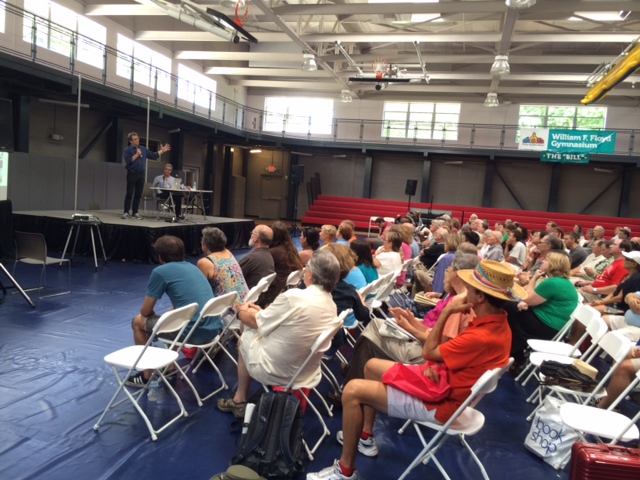
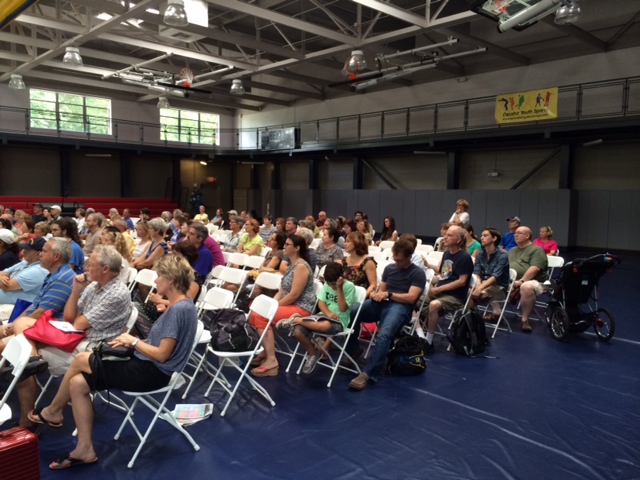
Here are a few images from my Sunday talk at the Decatur Book Festival, near Atlanta. It was a well-attended event, very well organized, smart questions. A great start to the book tour!

Decatur1StandingDecatur2AudienceDecatur3Talking

I will be signing at the Strand on Wednesday

•

One of New York City’s best bookstores is the Strand at Broadway and 12th St. in Manhattan, and I will be signing my new book about Afghanistan under US occupation, a hybrid work of prose and comics, there this coming Wednesday night. There will also be a visual presentation including photographs and comics. Here are the details:

Wednesday, September 3, 2014
7:00 PM

The Strand
828 Broadway
New York, NY 10003

Note: the event will be in the rare books department, on the third floor. I believe the entrance is to the left of the main entrance, but I might be mistaken.

SYNDICATED COLUMN: 50%+ of Americans Have Been Poor, and Capitalism Thinks That’s Awesome

•

Odds are, you are poor. Or you’ve been poor.

Conventional wisdom — i.e., what the media says, not what most people think — repeatedly implies that poverty is a permanent state that chronically afflicts a relatively small number of Americans, while the rest of us thrive in a vast, if besieged, middle class. In fact, most Americans between age 25 and 75 have spent at least one year living under the poverty line.

“One of the biggest myths about poverty in the United States is that a relatively small segment of the population is poor, and that this represents a more or less permanent underclass,” Columbia University economist and social work professor Irwin Garfinkel tells Columbia magazine. “But poverty is quite dynamic. Lots of people move in and out of poverty over the course of their lives. And it doesn’t take much for people at the edge to lose their footing: a reduction in work hours, an inability to find affordable day care, a family breakup, or an illness — any of these can be disastrous.”

Even if you bounce back, the effects of these financial setbacks linger. For young adults, attending cheaper colleges or passing up higher education — or being unable to afford to take a low-paid internship — burdens them with opportunity costs that hobble them the remainder of their lives (which will likelier end sooner). Debts accrue with compound interest and must be repaid; damaged credit ratings block qualified buyers from purchasing homes. Diseases go undetected and untreated during periods without healthcare. Gaps on resumes are a red flag for employers.

Americans pay a price for the boom-and-bust cycle of capitalism. To find out exactly how high the cost is, Professor Garfinkel and his colleagues at Columbia have created the Poverty Tracker, dubbed “one of the most richly detailed studies of poverty ever undertaken in the United States.” The Poverty Tracker is “a meticulous long-term survey of 2,300 New York households across all income levels…for at least two years” that aims “to create a much more intimate and precise portrait of economic distress than has ever been conducted in any US city.”

Initial findings were distressing: “While the city’s official poverty rate is 21%, the Columbia researchers found that 37% of New Yorkers, or about 3 million people, went through an extended period in 2012 when money was so tight that they lost their home, had their utilities shut off, neglected to seek medical treatment for an illness, went hungry, or experienced another ‘severe material hardship,’ as the researchers define such extreme consequences.”

Wait, it’s even worse than that:

“Even the 37% figure understates the number of New Yorkers who endured tough times in 2012. The researchers estimate that two million more endured what they call ‘moderate material hardship,’ which, as opposed to, say, losing one’s home or having the lights shut off, might involve merely falling behind on the rent or utility bills for a couple of months. Many others were in poor health. Indeed, the researchers found that if you add together all of those who were in poverty, suffered severe material hardship, or had a serious health problem, this represented more than half of all New Yorkers [emphasis is mine].”

The researchers hope that “they will have enough data to begin helping public authorities, legislators, foundations, nonprofits, philanthropists, and private charities address the underlying problems that affect the city’s poor” by the end of 2014.

Nationally, more than 35% of all Americans are currently ducking calls from collection agencies over unpaid debts.

What can be done?

Under this system? Not much. Democrats, who haven’t even proposed a major anti-poverty program since the 1960s, aren’t meaningfully better on poverty than Republicans.

As things stand, the best we can hope for from the political classes are crumbs: a few teeny-weeny proposals for wee reforms.

Like expanding day-care programs. More school lunches. Housing subsidies. “Additional investments in food programs.”

A drop in the bucket in an ocean of misery.

The Poverty Tracker shows that poverty is a huge problem in the United States. Unfortunately its authors, who draw their salaries from an institution intimately intertwined with monied elites, dare not openly suggest what they know to be true, that the key to eliminating poverty is to get rid of its root cause: capitalism.

(Ted Rall, syndicated writer and cartoonist, is the author of “After We Kill You, We Will Welcome You Back As Honored Guests: Unembedded in Afghanistan,” out Sept. 2. Subscribe to Ted Rall at Beacon.)

COPYRIGHT 2014 TED RALL, DISTRIBUTED BY CREATORS.COM
 

keyboard_arrow_up
css.php